 Tel: +86 13342660375
  E-mail:

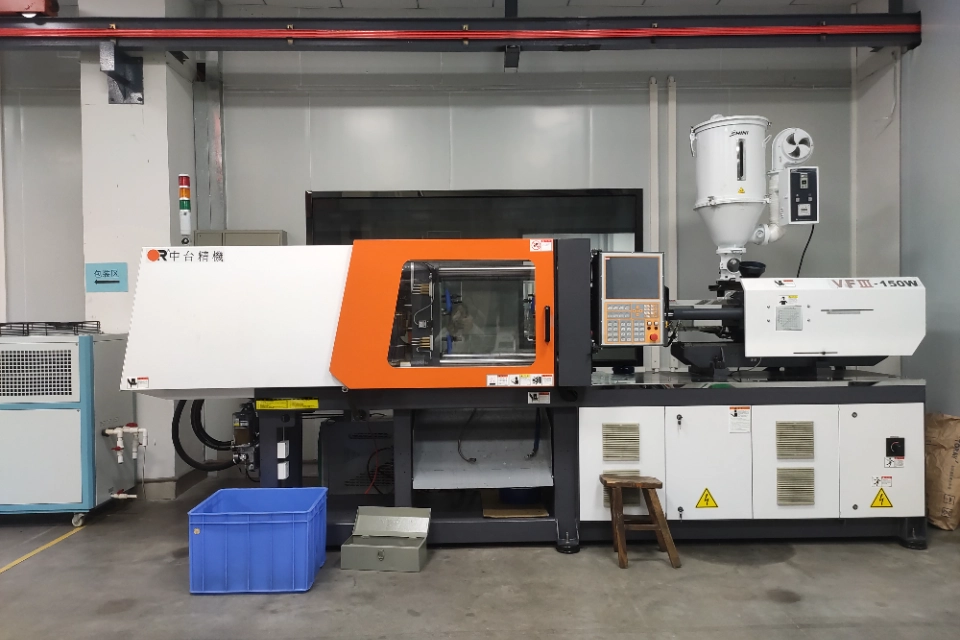
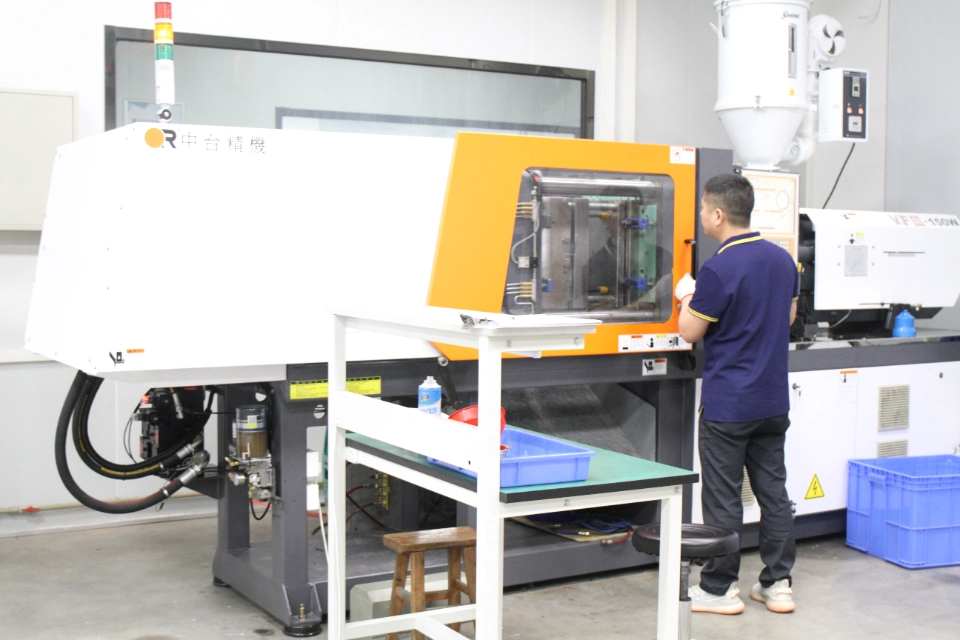
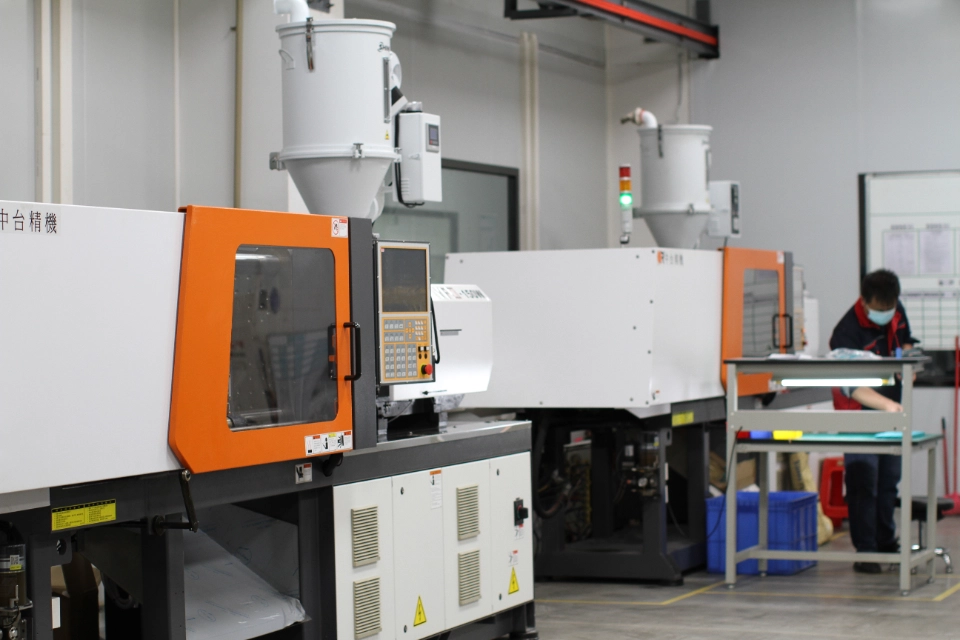


Our injection molding workshop is equipped with a Victor Taichung VFIII-series servo-hydraulic injection molding machine for mold trials, process verification, sample production, and repeat manufacturing of plastic components.
Based on the visible machine marking, the equipment appears to belong to the VFIII-120 series. Because the complete model plate is not fully readable in the image, it is more appropriate to present it under the general VFIII-series equipment name rather than state unverified specifications.
The VFIII series combines hydraulic injection and clamping mechanisms with servo-controlled pressure and flow regulation. This configuration supports adjustable molding conditions while helping maintain stable operation across repeated production cycles.
Key Advantages
- Stable injection control
- Flexible process adjustment
- Reliable mold clamping
- Consistent molding cycles
- In-house mold verification
Injection Molding Capabilities
The machine is used to process thermoplastic materials through a controlled molding cycle. Plastic pellets are fed into the barrel, heated and plasticized, injected into the closed mold cavity, held under pressure, cooled, and then released through the mold’s ejection system.
Operators can set and monitor process conditions such as:
- Barrel temperature
- Injection speed and pressure
- Screw position and metering
- Holding pressure and time
- Back pressure
- Mold opening and closing
- Clamping conditions
- Cooling time
- Ejector movement
- Overall molding cycle
These settings are adjusted according to the resin, mold structure, wall thickness, part geometry, surface requirements, and dimensional tolerances.
Typical Applications
The equipment supports the production and validation of:
- Precision plastic components
- Equipment housings and covers
- Electronic and connector parts
- Small and medium structural parts
- Insert-molded components
- Functional prototypes
- Mold-trial samples
- Low-volume production
- Repeat production batches
The VFIII range includes different clamping-force and injection-unit configurations, allowing machines within the series to support molds and components of different sizes. Official series information lists 120-ton configurations among the available models.
Mold Trial and Process Verification
After a mold has completed machining, EDM, grinding, fitting, and assembly, it can be installed on the injection molding machine for practical testing.
During mold trials, our technicians evaluate:
- Cavity filling behavior
- Flash and short-shot conditions
- Weld lines and flow marks
- Holding and shrinkage behavior
- Surface appearance
- Dimensional stability
- Cooling performance
- Ejection and demolding
- Cycle consistency
The resulting samples provide direct feedback to the mold-manufacturing, molding, engineering, and quality teams. When necessary, adjustments can be made to process parameters, venting, gates, cooling channels, ejector settings, or local mold structures.
Role in Our Manufacturing Process
A typical workflow involving this equipment may include:
- Mold assembly and fitting
- Mold installation and setup
- Resin drying and material preparation
- Initial molding-parameter adjustment
- Sample molding
- Appearance and dimensional inspection
- Mold or process correction
- Repeat verification and batch production
Keeping this molding capability within our factory allows process results to be reviewed directly alongside mold-manufacturing and inspection data. This supports faster coordination when filling, appearance, dimensional, cooling, or demolding issues are identified.
The Victor Taichung VFIII machine shown forms part of our in-house plastic molding capacity. Actual processing methods depend on the machine configuration, resin material, mold design, component geometry, tolerance requirements, and production quantity.
Contact Information
-
 [email protected]
-
 +86 13342660375Telephone
-
 Address
No. 62, Jinghai East Road, Shatou Community, Chang' an Town, Dongguan City, Guangdong Province, China
Address
No. 62, Jinghai East Road, Shatou Community, Chang' an Town, Dongguan City, Guangdong Province, China
 Schedule a Home Visit
Leave us a Message
Have questions or need assistance? Get in touch with us, and we’ll be happy to help!


