 Tel: +86 13342660375
  E-mail:

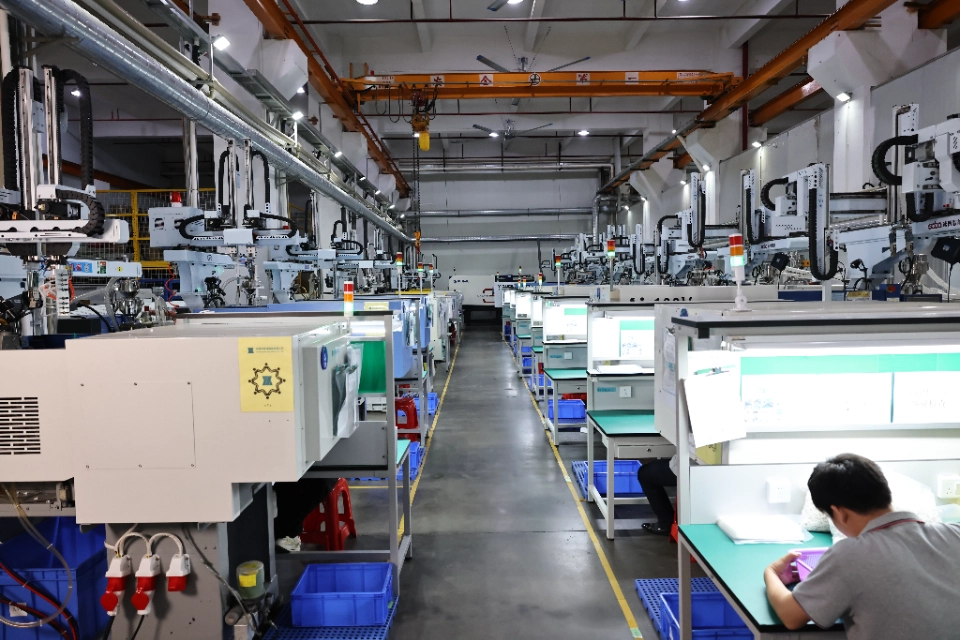
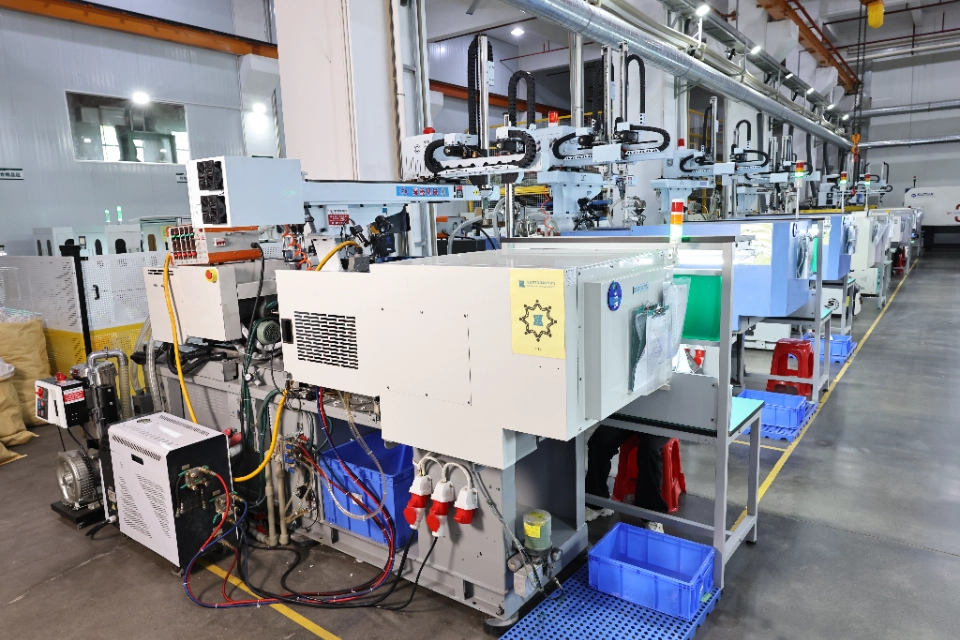
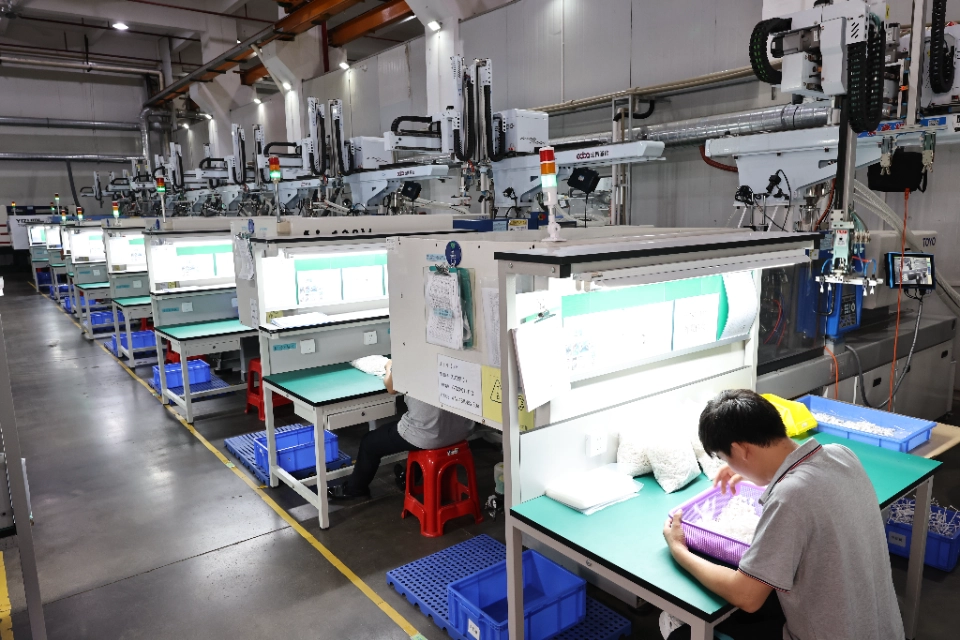


Our plastic molding workshop is equipped with multiple automated horizontal injection molding cells for the in-house production of precision plastic components. Each cell combines an injection molding machine with a top-entry take-out robot, machine-side auxiliary equipment, product collection areas, and operator inspection stations.
The multi-machine arrangement supports parallel production across different molds, materials, component specifications, and production batches. Mold setup, parameter adjustment, automated part removal, visual inspection, sorting, and packaging can be coordinated within the same workshop.
Take-out robots are widely used with injection molding machines to remove molded products accurately and transfer them to downstream operations. Depending on the production setup, these operations may include gate separation, insert handling, camera inspection, product positioning, and collection.
Injection Molding Capabilities
The horizontal injection molding machines process thermoplastic materials through a programmed production cycle. Plastic resin is prepared, plasticized inside the barrel, injected into the closed mold cavity, held under controlled pressure, cooled, and then released after the mold opens.
Operators can set and monitor process conditions such as:
- Barrel temperature
- Injection speed and pressure
- Screw position and metering
- Holding pressure and time
- Back pressure
- Mold opening and closing
- Clamping conditions
- Cooling time
- Ejection sequence
- Overall cycle time
These settings are adjusted according to the resin material, mold structure, component geometry, wall thickness, appearance requirements, and dimensional tolerances.
Automated Part Removal
The top-entry robots visible above the machines enter the mold area after the molding cycle and remove the molded component or runner system. The robot can then transfer the part to a collection tray, inspection position, conveyor, gate-removal station, or other downstream process.
Automated removal helps maintain a more consistent handling sequence between cycles. It is particularly useful for parts that require controlled orientation, reduced surface contact, or separation from runners immediately after molding. Official take-out robot systems are designed to remove molded products safely, quickly, and accurately from injection molding machines.
Machine-Side Auxiliary Systems
The production cells are supported by auxiliary equipment for material preparation, conveying, temperature control, cooling, and process stabilization. Depending on the resin and mold requirements, the equipment arrangement may include:
- Hopper dryers
- Automatic material loaders
- Mold-temperature controllers
- Water chillers
- Material dosing units
- Runner-separation devices
- Collection bins and trays
Automatic hopper loaders are commonly used to convey plastic material to injection molding machines, while hopper dryers help control material moisture before molding.
Typical Applications
The automated injection molding lines can support the production of:
- Precision plastic components
- Electronic and connector parts
- Small equipment housings
- Functional structural components
- Plastic rings, sleeves, and fittings
- Molded components with fine features
- Mold-trial samples
- Low-volume production
- Repeat production batches
The actual application of each machine depends on its clamping capacity, injection unit, installed mold, material system, and automation configuration.
Inspection and Production Control
The illuminated workstations positioned beside the molding machines are used for machine-side product handling and inspection. After removal from the mold, components can be checked for:
- Short shots and incomplete filling
- Flash and burrs
- Flow marks and weld lines
- Surface scratches
- Deformation or shrinkage
- Gate-area condition
- Color consistency
- Visible contamination
- General dimensional appearance
Inspection findings can be communicated directly to the molding and tooling teams. When variation is identified, technicians can review molding parameters, tool condition, cooling, venting, gate performance, or automated handling settings before continuing the production batch.
Role in Our Manufacturing Process
The automated injection molding workshop is integrated with our mold design, CNC machining, EDM, grinding, mold assembly, trial molding, and quality-inspection capabilities.
A typical workflow may include:
- Mold assembly and fitting
- Mold installation and setup
- Material drying and preparation
- Initial molding-parameter adjustment
- Automated sample production
- Robot-assisted part removal
- Appearance and dimensional inspection
- Process optimization and repeat production
Combining injection molding machines, robots, auxiliary equipment, and inspection stations within one production area helps coordinate the complete process from material preparation to molded-part verification. Fully integrated injection molding systems can connect automatic material feeding, molding, robot removal, and downstream handling within the same production workflow.
The images represent our automated horizontal injection molding capacity. The exact brands and model numbers of the individual machines should be confirmed from their equipment nameplates before being listed separately.
Contact Information
-
 [email protected]
-
 +86 13342660375Telephone
-
 Address
No. 62, Jinghai East Road, Shatou Community, Chang' an Town, Dongguan City, Guangdong Province, China
Address
No. 62, Jinghai East Road, Shatou Community, Chang' an Town, Dongguan City, Guangdong Province, China
 Schedule a Home Visit
Leave us a Message
Have questions or need assistance? Get in touch with us, and we’ll be happy to help!


