 Tel: +86 13342660375
  E-mail:

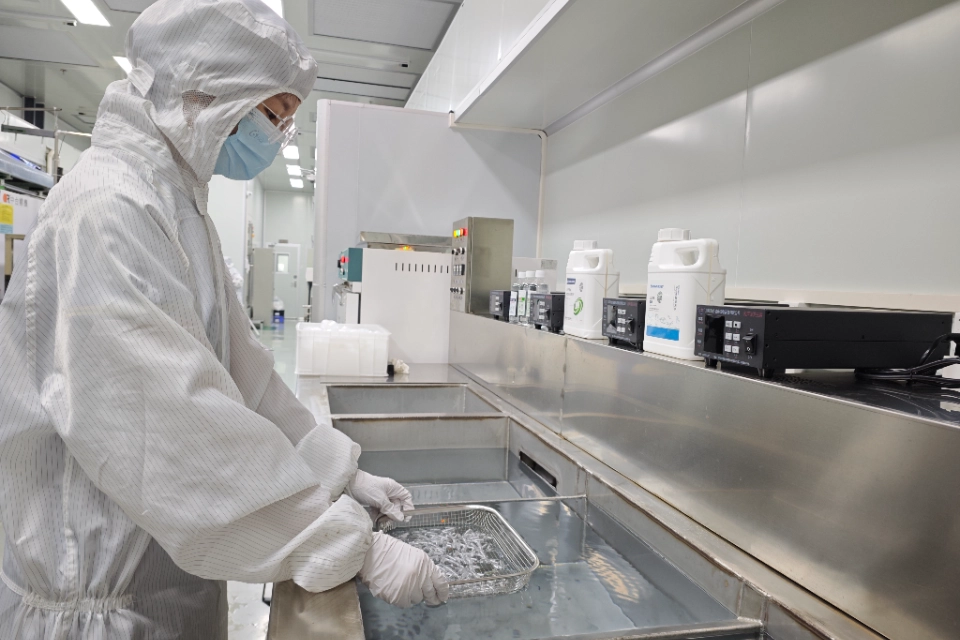
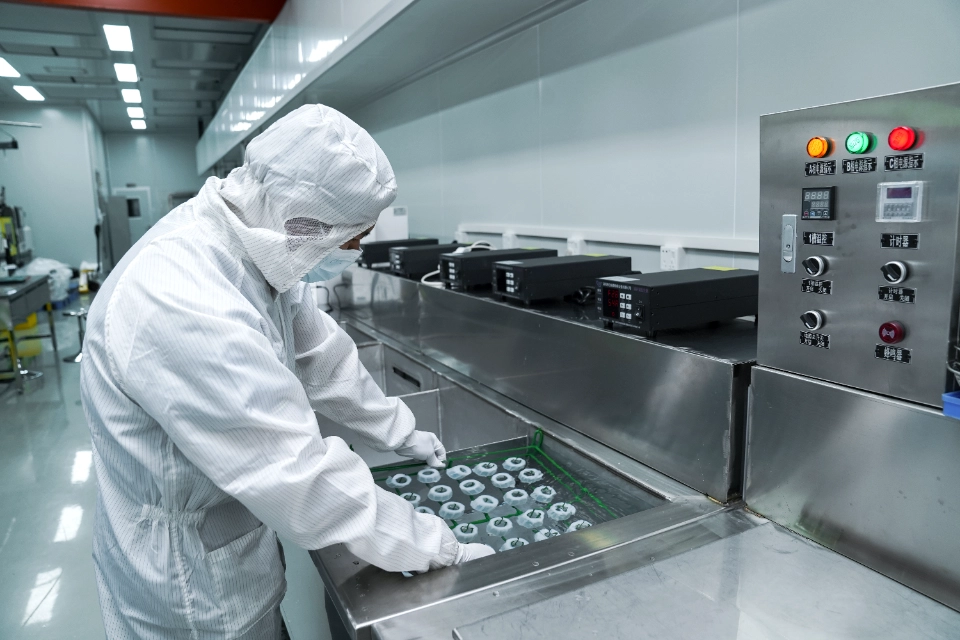
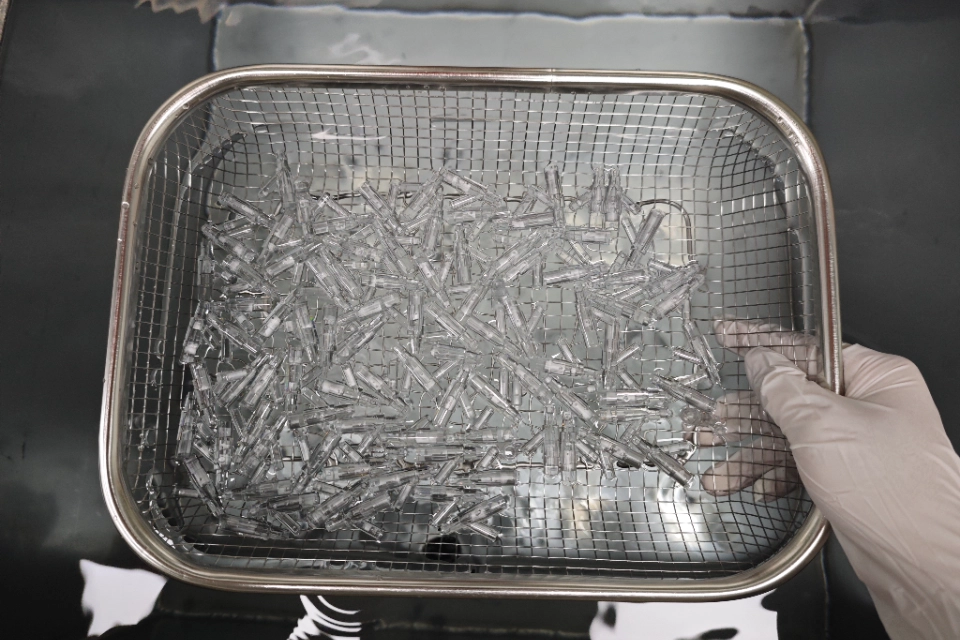


Our Class 1,000 cleanroom cleaning workshop supports the precision cleaning, rinsing, and controlled handling of plastic components, PFA parts, molded products, and other components with strict cleanliness requirements.
The image shows a multi-stage ultrasonic cleaning system installed in a controlled production environment. Operators wear cleanroom garments, masks, gloves, and protective equipment to reduce contamination from dust, fibers, oil, and direct contact during cleaning and material handling.
The cleaning process is completed within our factory and coordinated with injection molding, component inspection, drying, packaging, and final quality control.
Precision Cleaning Capabilities
The workshop uses ultrasonic cleaning tanks and controlled rinsing processes to remove contaminants from component surfaces, gaps, holes, grooves, and other difficult-to-access areas.
Depending on the component material and cleanliness requirements, the process may include:
- Pre-cleaning
- Ultrasonic washing
- Multi-stage rinsing
- Purified-water cleaning
- Controlled drying
- Visual inspection
- Clean handling and transfer
- Cleanroom packaging
Ultrasonic energy creates fine cavitation within the cleaning liquid, helping loosen particles and residues from complex surfaces without relying entirely on manual brushing or direct mechanical contact.
Typical Components
The workshop can support the cleaning of:
- PFA and fluoropolymer components
- Precision injection-molded parts
- Semiconductor-related plastic components
- Rings, fittings, and sealing parts
- Components with internal channels
- Small precision assemblies
- Parts requiring controlled surface cleanliness
- Components prepared for clean packaging
Fixtures and baskets are selected according to part geometry to keep components separated and reduce surface contact, collision, or deformation during the cleaning cycle.
Cleanroom Process Control
The cleaning area is organized to limit the introduction and transfer of contaminants during production. Operators follow controlled entry, clothing, handling, and cleaning procedures before working with processed components.
Important control points may include:
- Cleanroom clothing compliance
- Cleaning-liquid condition
- Bath temperature
- Ultrasonic cleaning time
- Rinsing sequence
- Fixture cleanliness
- Drying conditions
- Component exposure time
- Packaging and transfer methods
Parts are handled with gloves and suitable fixtures to reduce direct contact after cleaning. Cleaned components can then be transferred to inspection or packaging without returning to an uncontrolled workshop environment.
Role in Our Manufacturing Process
The Class 1,000 cleanroom cleaning workshop forms part of our integrated precision manufacturing and quality-control system.
A typical workflow may include:
- Injection molding or component manufacturing
- Initial appearance inspection
- Component sorting and fixture loading
- Multi-stage ultrasonic cleaning
- Controlled rinsing and drying
- Cleanroom visual inspection
- Clean packaging
- Final quality verification
Completing cleaning, inspection, and packaging within the same controlled environment helps reduce repeated exposure to airborne particles and supports more consistent handling between production stages.
The workshop shown represents our in-house precision cleaning capability. Actual cleaning procedures are selected according to component material, geometry, contamination type, cleanliness requirements, and packaging specifications.
Contact Information
-
 [email protected]
-
 +86 13342660375Telephone
-
 Address
No. 62, Jinghai East Road, Shatou Community, Chang' an Town, Dongguan City, Guangdong Province, China
Address
No. 62, Jinghai East Road, Shatou Community, Chang' an Town, Dongguan City, Guangdong Province, China
 Schedule a Home Visit
Leave us a Message
Have questions or need assistance? Get in touch with us, and we’ll be happy to help!


