 Tel: +86 13342660375
  E-mail:

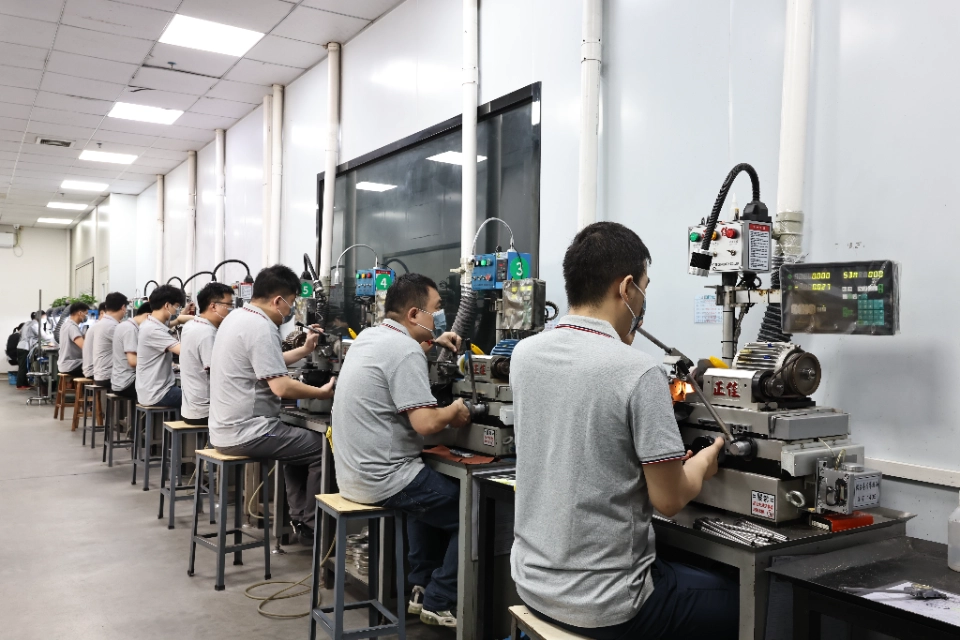


Our precision punch grinding workshop is equipped with multiple dedicated grinding stations for the in-house finishing of punches, core pins, ejector pins, guide components, and other small cylindrical mold parts.
The equipment shown is used primarily for punch and pin grinding rather than stamping production. Operators control the workpiece rotation, grinding position, feed, and dimensional measurement at individual workstations. Punch grinding machines are designed for small-diameter cylindrical mold components that require controlled outer diameters, profiles, and end features.
The multi-station layout allows different component specifications and production batches to be processed in parallel while maintaining direct coordination with mold assembly, surface grinding, wire EDM, CNC machining, and dimensional inspection.
Grinding Capabilities
The workshop supports the precision grinding of small cylindrical and shaft-type components used in molds, dies, tooling systems, and automation assemblies.
Typical grinding operations include:
- Outside-diameter grinding
- Stepped-diameter grinding
- Taper and chamfer grinding
- End-face finishing
- Shoulder grinding
- Tip and profile forming
- Length adjustment
- Local relief grinding
- Regrinding of worn punch components
Depending on the drawing requirements, punches may require straight cylindrical surfaces, stepped sections, tapered tips, radiused ends, flat features, or other localized profiles. Dedicated punch-grinding fixtures help rotate and position small cylindrical workpieces during precision form grinding.
Typical Components
The workshop is mainly used for:
- Precision punches
- Core pins
- Ejector pins
- Guide pins
- Pilot pins
- Small mold inserts
- Tungsten carbide punches
- High-speed steel tooling
- Small shafts and cylindrical parts
- Replacement and maintenance tooling
Commonly processed materials include tool steel, high-speed steel, tungsten carbide, hardened alloy steel, and other grindable materials specified by the component drawing.
Precision grinding is particularly important for mold components because dimensional accuracy and surface condition can influence tooling alignment, operating clearance, wear behavior, and service life.
Dimensional and Process Control
Operators monitor the grinding allowance, workpiece position, wheel condition, feed amount, and component dimensions throughout the process.
Inspection items may include:
- Outside diameter
- Overall length
- Step position
- Tip geometry
- Roundness
- Cylindricity
- Straightness
- Concentricity
- Surface finish
Digital readouts and measuring instruments positioned beside the machines support frequent dimensional checks during grinding. Measurement results can be used to adjust the feed or grinding allowance before the remaining components in the batch are completed.
This approach is suitable for small precision parts because even minor deviations in punch diameter, tip geometry, or working length may affect the fit and operation of the assembled mold.
Role in Our Mold Manufacturing Process
Punch grinding is integrated into our mold-component manufacturing workflow. Parts may enter the workshop after turning, heat treatment, centerless grinding, or preliminary cylindrical grinding, depending on their geometry and material condition.
A typical process may include:
- Raw material or blank preparation
- CNC turning or rough machining
- Heat treatment when required
- Initial cylindrical grinding
- Precision punch and profile grinding
- End-face or length adjustment
- Dimensional inspection
- Mold assembly and fitting
For replacement punches or worn tooling, the workshop can also support inspection, regrinding, and dimensional restoration when sufficient machining allowance remains.
Operating multiple grinding stations within the factory allows production work to be allocated according to component diameter, material, profile complexity, tolerance, quantity, and delivery schedule. It also enables direct communication between grinding technicians, mold assemblers, engineers, and quality inspectors when process adjustments are required.
The workshop shown represents our in-house capability for precision punch and small cylindrical mold-component grinding. Actual grinding methods are selected according to the component material, hardness, profile geometry, machining allowance, surface requirements, and drawing tolerances.
Contact Information
-
 [email protected]
-
 +86 13342660375Telephone
-
 Address
No. 62, Jinghai East Road, Shatou Community, Chang' an Town, Dongguan City, Guangdong Province, China
Address
No. 62, Jinghai East Road, Shatou Community, Chang' an Town, Dongguan City, Guangdong Province, China
 Schedule a Home Visit
Leave us a Message
Have questions or need assistance? Get in touch with us, and we’ll be happy to help!


