 Tel: +86 13342660375
  E-mail:

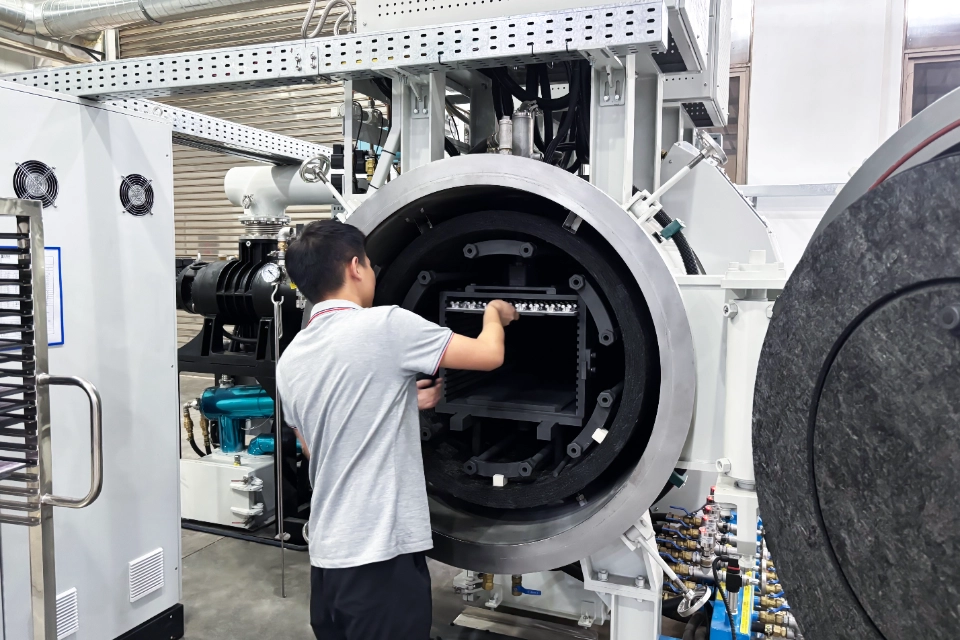
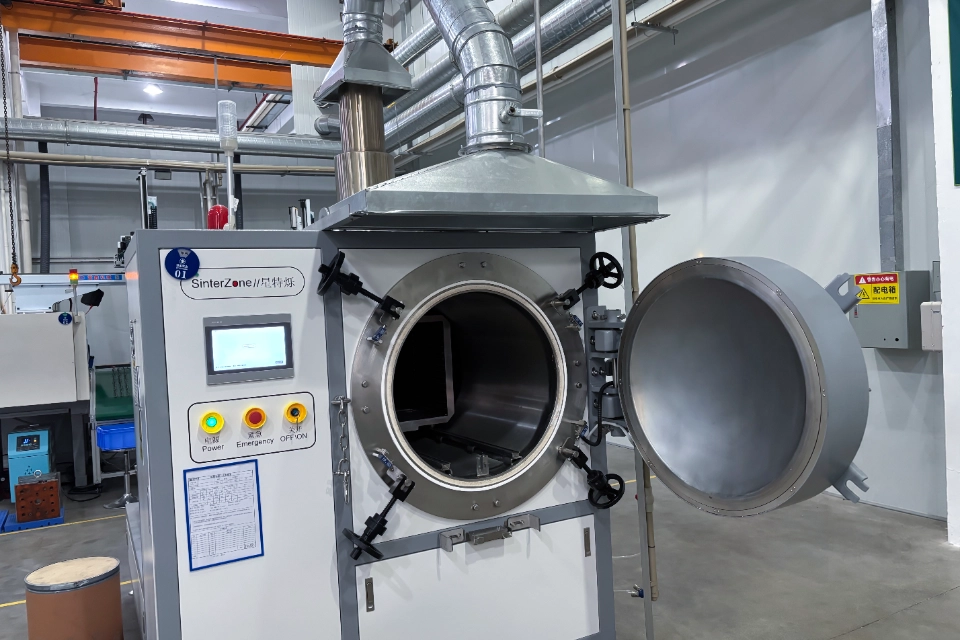


Our MIM production area is equipped with a SinterZone debinding furnace for removing binder materials from metal injection molded components before sintering.
After injection molding, MIM green parts contain both metal powder and an organic binder system. The components are arranged on dedicated trays and loaded into the furnace, where a controlled debinding cycle removes most of the binder while helping the parts retain their molded geometry.
SinterZone manufactures several types of MIM and CIM debinding equipment, including catalytic and solvent debinding furnaces. The exact model and debinding method of the machine shown cannot be confirmed from the visible nameplate, so the general equipment name is recommended.
Key Advantages
- Controlled binder removal
- Stable batch processing
- Programmable process cycles
- Organized tray loading
- Preparation for sintering
Equipment Capabilities
The furnace supports batch processing of small precision MIM components. Parts are distributed across multiple trays to maintain suitable spacing and consistent process exposure.
Depending on the feedstock and binder system, operators control parameters such as:
- Debinding temperature
- Processing time
- Gas or process-medium flow
- Chamber conditions
- Exhaust treatment
- Heating and cooling stages
SinterZone’s catalytic debinding equipment operates at relatively low process temperatures, while its solvent systems use different equipment and cycle configurations. The correct route is selected according to the feedstock formulation and approved manufacturing process.
Role in Our MIM Process
The debinding furnace connects injection molding with high-temperature sintering in our MIM production workflow.
A typical process includes:
- Metal feedstock injection molding
- Green-part inspection
- Tray arrangement and furnace loading
- Controlled debinding
- Brown-part inspection
- Vacuum or controlled-atmosphere sintering
- Dimensional and appearance verification
- Secondary finishing when required
Careful binder removal is important because an unsuitable debinding cycle may contribute to cracking, deformation, blistering, or residual contamination. Process conditions are therefore selected according to the material system, component wall thickness, geometry, tray arrangement, and subsequent sintering requirements.
The SinterZone equipment shown represents our in-house MIM debinding capability. Actual cycle parameters and acceptance criteria are determined by the feedstock formulation, component design, production procedure, and quality requirements.
Contact Information
-
 [email protected]
-
 +86 13342660375Telephone
-
 Address
No. 62, Jinghai East Road, Shatou Community, Chang' an Town, Dongguan City, Guangdong Province, China
Address
No. 62, Jinghai East Road, Shatou Community, Chang' an Town, Dongguan City, Guangdong Province, China
 Schedule a Home Visit
Leave us a Message
Have questions or need assistance? Get in touch with us, and we’ll be happy to help!


